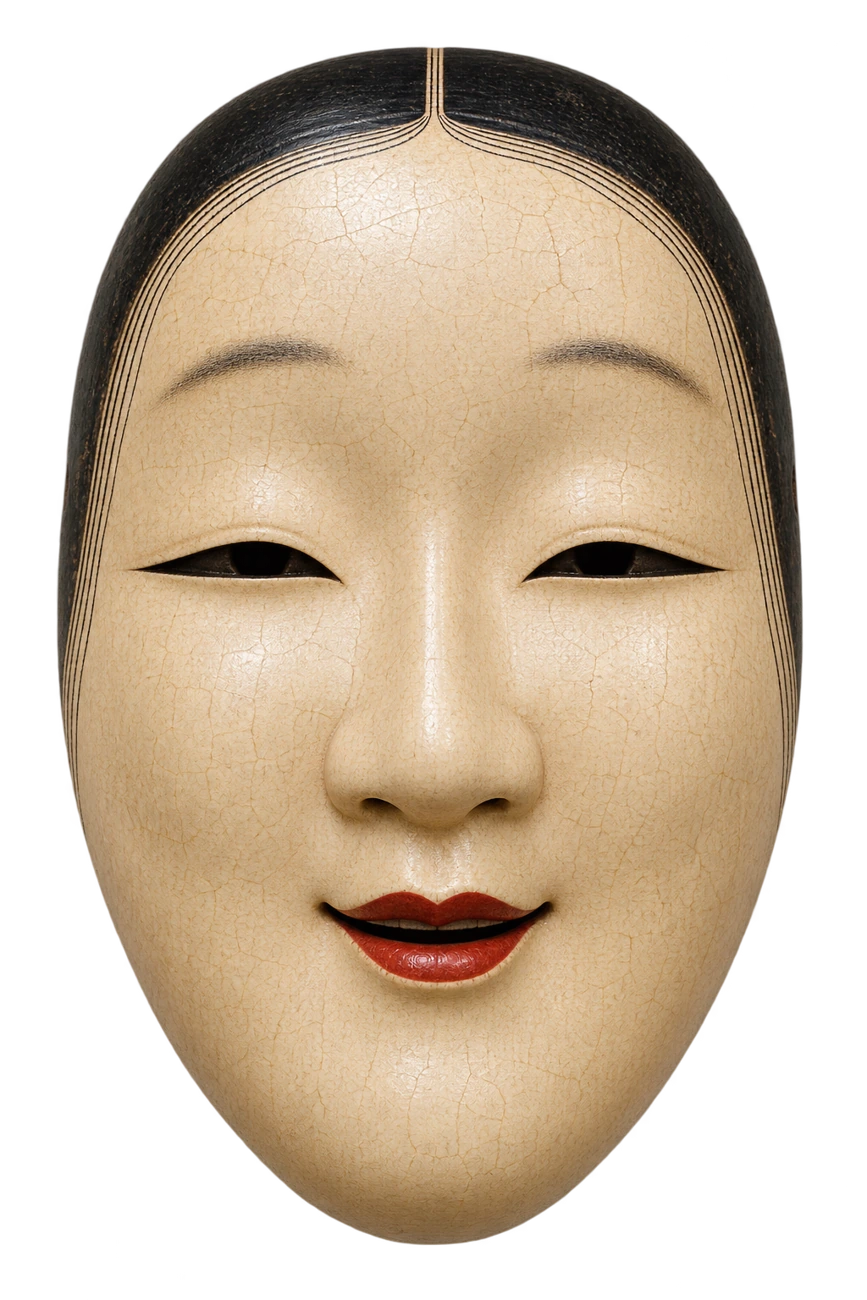
Noh brings masks, costume and movement together within a performance tradition. The Nohgaku Performers’ Association describes how a slight upward or downward tilt can change the expression perceived by the audience: teru, to brighten, and kumoru, to cloud. A fixed object becomes expressive through the way it is worn.
Notice the brow, the narrow eyes and the shape of the mouth. The performer’s angle and the surrounding light change how these surfaces are read. A contemporary mask can invite this kind of looking, but its appearance alone does not establish its place in the Noh repertoire.
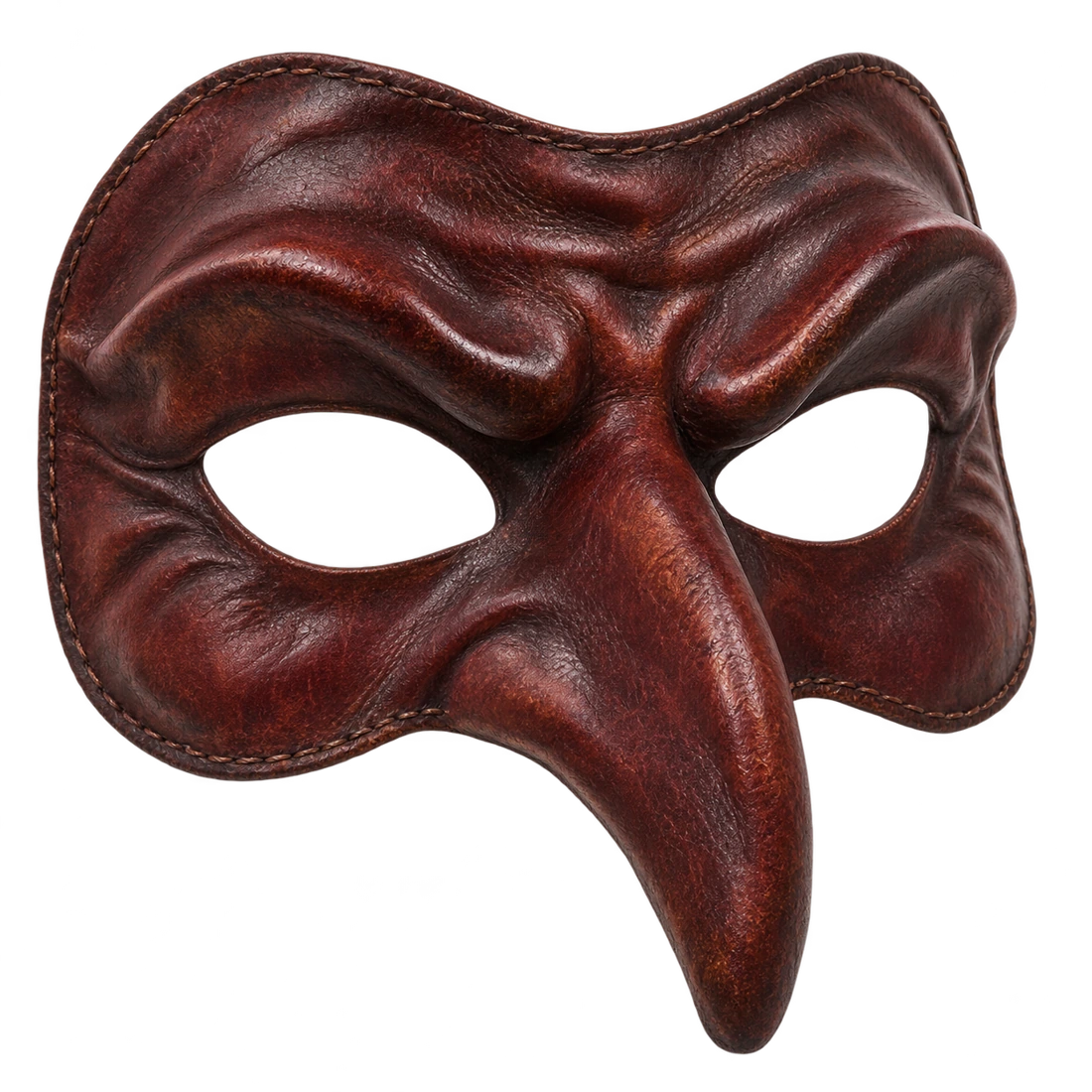
Commedia dell’arte developed a theatre of recognisable character types, improvised dialogue and physical expression. The Metropolitan Museum of Art describes how masks placed greater emphasis on gesture and dialect when facial expression was partly hidden. A silhouette could suggest a character before a line was spoken.
The long nose, projecting brow or open lower face changes how a performer uses the head and body. These visual choices belong to specific theatrical histories rather than a single universal mask language. Our half-mask direction takes inspiration from that expressive potential; it is not attributed to a historical maker or character.
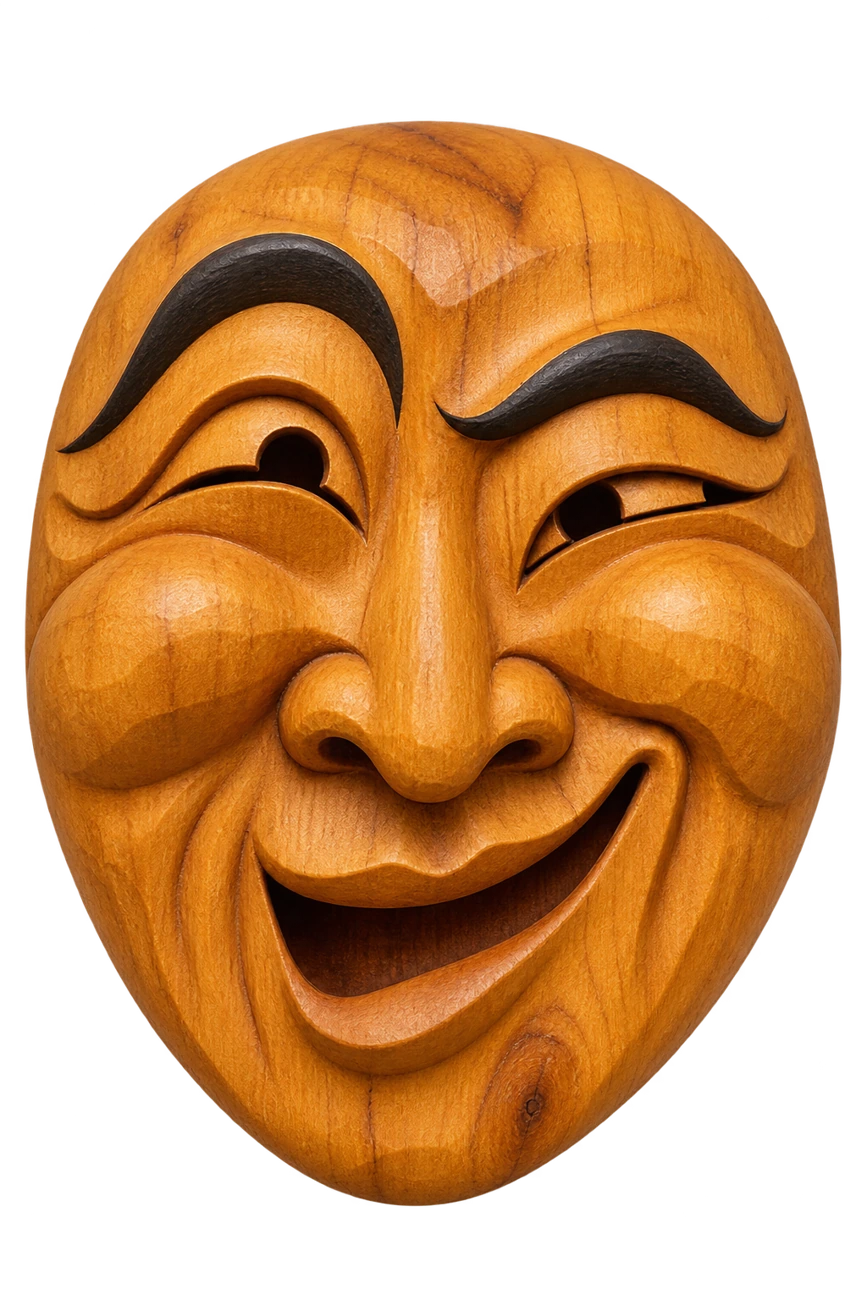
Talchum combines dance, music and theatre. UNESCO describes masked performers using songs, movement and dialogue to explore social issues with humour. Audiences are part of the event, responding as the drama unfolds. The mask belongs to an exchange between performers and people, rather than an isolated object.
Exaggerated features can help a character read across a performance space. Regional traditions, local songs and dialects matter: an expressive wooden face should not be assumed to stand for every form of talchum. Looking closely begins with acknowledging the communities that carry the practice.
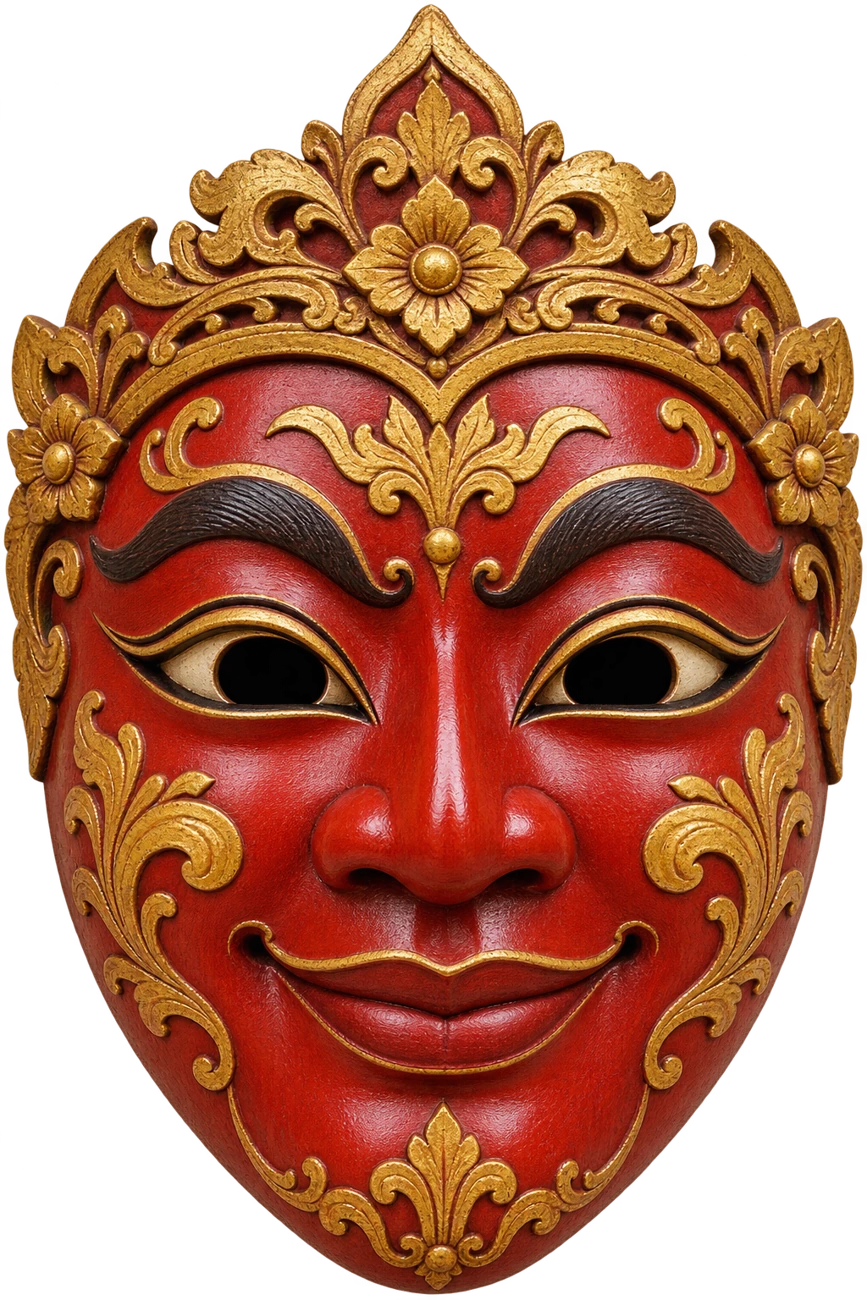
UNESCO distinguishes sacred, semi-sacred and community-entertainment genres within traditional Balinese dance. Movement, expression and gamelan accompaniment work together; the context of a performance matters as much as the visual richness of a costume or face.
An ornamental mask is not automatically interchangeable with a ceremonial object. Before using a culturally specific form, learn its name, role and setting from knowledgeable practitioners. SURYA is presented here as a contemporary theatrical interpretation, not as a consecrated mask, a community-authorised reproduction or a claim of traditional manufacture.
These short notes introduce performance contexts; they are not exhaustive histories. Product imagery shows contemporary design directions. Cultural origin, maker, material and ceremonial status should be documented separately for any traditional object.